The Business of Fashion

  • About
  • MASTERCLASS SERIES
  • FREE WORKSHOP
  • Resources
    • How to Start an Online Boutique
    • How to Start a Fashion Blog

Archives for March 2012

What is the Salary of a Fashion Designer?

By 2 Comments

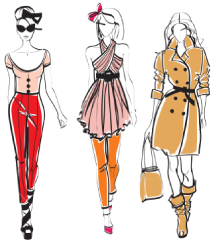
Fashion Sketch


So,  you’re passion is fashion design?

And now you’re wondering – what is the salary of a fashion designer?

 A Fashion Designer’s salary is mainly based on three different factors – location, education/experience, and the type of company you are working for.

  • Location

    The location of your new Fashion Design position makes all the difference in your salary. In the United States, most jobs in the fashion industry are going to be located in New York City or Los Angeles. Jobs in NYC usually pay more than in L.A., but it also costs significantly more to live in NYC. There are also jobs scattered throughout cities like Seattle, Dallas, Chicago, and Miami. Sometimes jobs in these areas can pay more than in Los Angeles or New York simply because its harder to recruit candidates to those locations. Based on my experience, the average Fashion Designer’s salary in Los Angeles is about $70,000. This doesn’t include any bonuses that a designer may receive in addition to their base salary because that number can vary greatly.

  • Education & Experience

    Your education and experience in the industry also will influence your salary. The feeling I get in the industry in L.A. is that experience is given more importance over education. Most employers don’t really care whether you did a 2 year, 4 year, or dropped out before you finished your program, IF you have the experience. But, when exploring jobs in other areas such as NYC or Dallas, or the Midwest, I found that they were still very interested in the education I had received no matter how much experience I had. Starting out as an entry-level Fashion Designer (you will most likely be an assistant), your average salary will be about $30,000-$40,000. Once you have a few years experience and reach mid-level, you’re salary will be about $40,000 – $60,000.  After you have over 7 years of experience, on average a Fashion Designer can make anywhere from $60,000 – $120,000. It is possible to make even more than that as well depending on the company you’re working for.

  • Type of Company

     The type of company you work for will directly impact your salary. If you work at a smaller start-up company, your salary will be a lot less than if you work for an already established corporate company. Also, you may choose to freelance and work with many different companies. Freelancers usually charge more, but it usually evens out since the work is not always steady and you will have to pay for your own benefits. 


What have you discovered about Fashion Designer salaries?
Filed Under: FASHION INDUSTRY, FASHION STUDENTS, TECHNICAL DESIGN

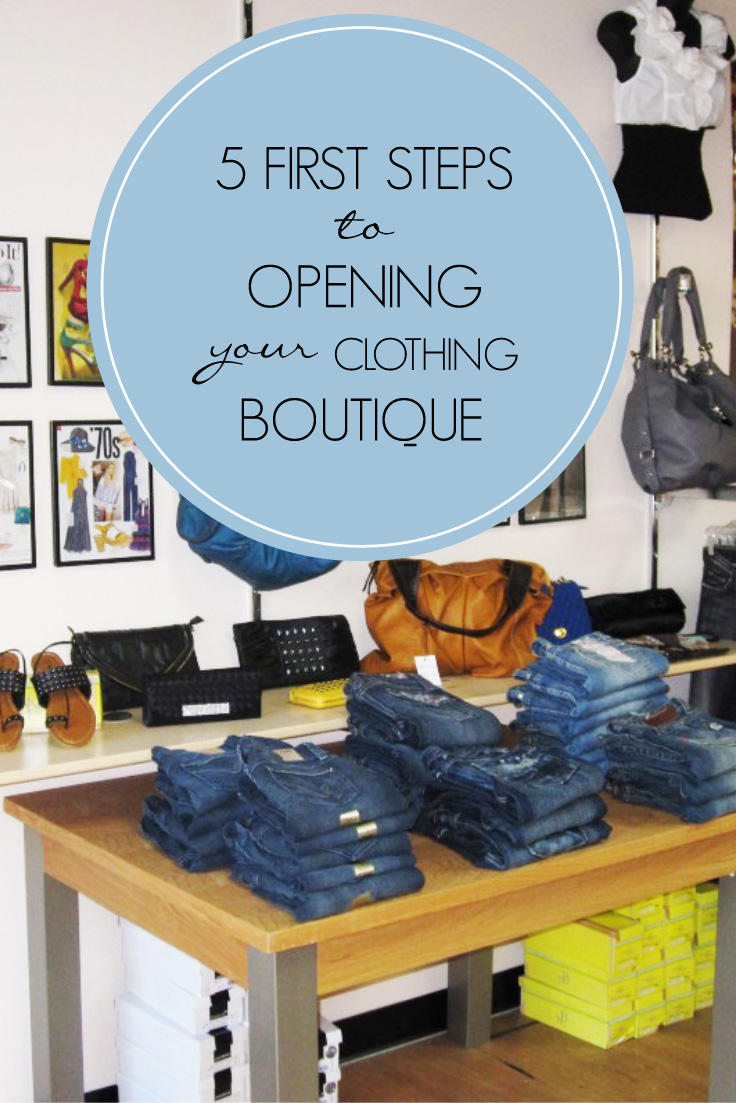
5 First Steps To Opening Your Clothing Boutique

By 242 Comments

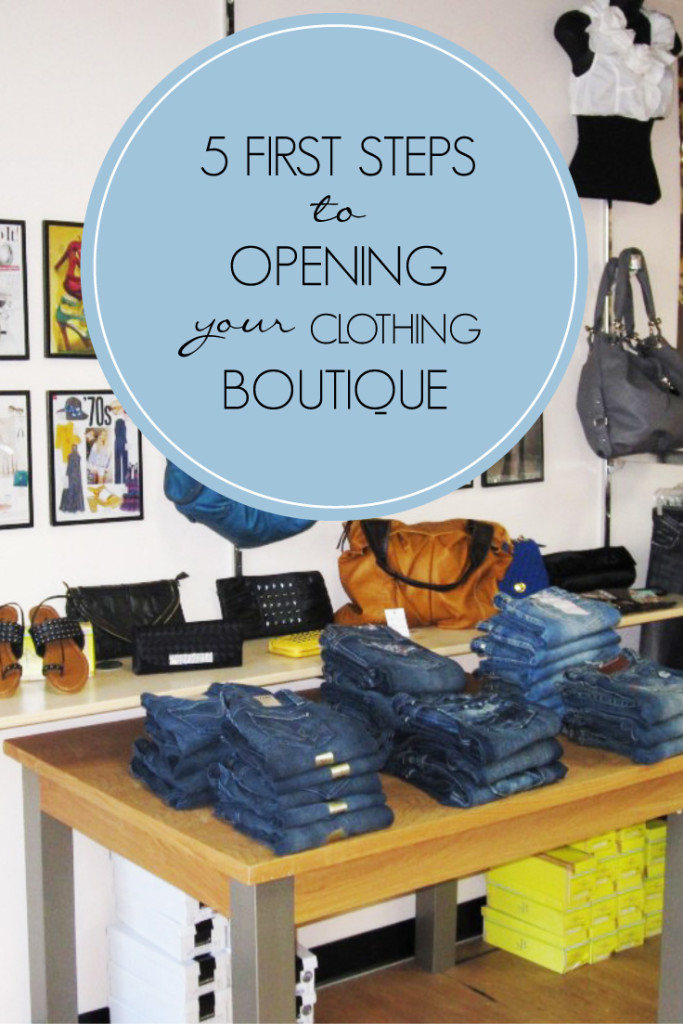
5 First Steps to Opening Your Clothing Boutique | technical-designer.com


It may seem like a daunting task to open your own clothing boutique. And while it doesn’t come without a lot of hard work, I know that anyone can do it!

At the age of 23, I decided to pursue opening my own store and am proud of what I accomplished in the end.

When I first started – I had no one to guide me and no one that I could ask questions to see if I was doing something correctly or not. All in all it was a lot of trial and error.

I decided to go ahead and put together 5 steps that will help you get started. This is for those of you that have the idea in your head, but haven’t started anything yet because maybe you just don’t know where to begin.


1) Create Your Vision

  • The very first thing I did when I decided to open my clothing boutique was to create my vision. If you have no vision, you have no end result. What I did that I found very helpful was to create my boutique’s vision book. I found pictures (from magazines and online) of the colors I liked for the inside of the store, what my target customer liked or looked like, different merchandising ideas, etc. Basically anything and everything that helped me to see my vision clearer. If you know exactly what the final look and feel of your boutique should be, it will be easier to make decisions throughout the process of opening your store because you will know exactly what you want the final product to be.

2) Develop Your Boutique’s Brand

  • When thinking of your boutique’s brand, keep in mind how you will stand out next to all the other clothing boutiques or stores. Have this in mind when choosing a name for your store and when designing your logo. When developing my store’s brand, I wanted to center around the fact that all the clothes and items I was going to be selling would be from Los Angeles based brands and designers. I wanted to offer Wisconsin all that Los Angeles had offered me in the shopping experience. I then developed everything from that idea, including my store name, look, and ambiance.

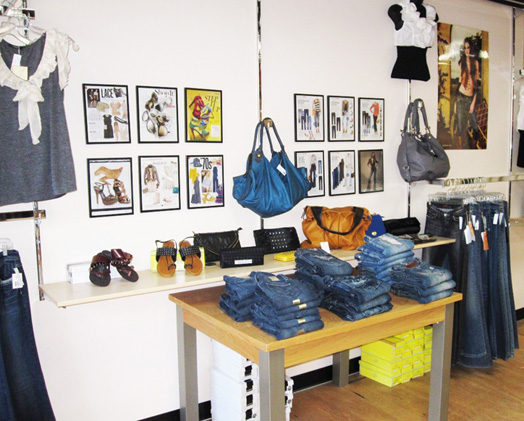
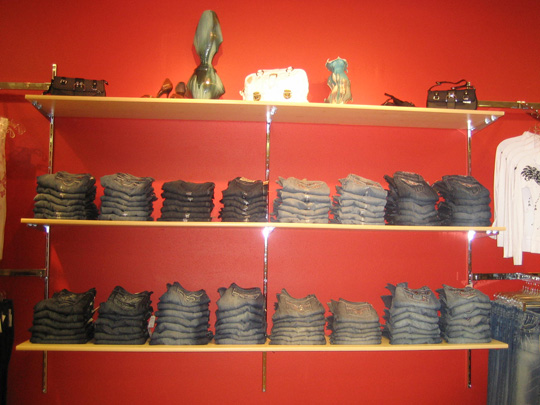
Clothing Boutique

3) Begin Your Business Plan

  • My business plan was probably the most difficult thing about opening a boutique for me. I bought a book on how to write a business plan and in the end I had barely looked at the thing. What I found most helpful was finding examples online of business plans.  BPlans.com is a great site that has a lot of information on business plans. You can create your business plan there and they even have very specific business plan examples for clothing boutiques. When I thought my business plan was complete I took it to the bank to ask for a loan, only to be sent back home a few different times to revise it. 🙂 So, no need to get discouraged if you have to revise it a few times! In the end, you’ll have a beautiful blueprint for your business.

4) Research Which Lines You Will Carry

  • It’s probably easiest to shop stores similar to your boutique and see what lines they have when deciding what merchandise to carry. Compile a list of brands that you’re interested in carrying and begin to contact the sales reps for these lines. Sometimes it takes a little while to be approved to carry certain brands or some you won’t be able to get at all. It just depends how selective the brand is when choosing what stores will carry their line. You could also visit a place like the Cal Mart in Los Angeles to get ideas and see the styles of different lines that you may want to carry in your boutique.

5) Start Your Website

  • I ended up starting my website before I opened the doors to my physical location. I started with a store on E-bay and then designed an e-commerce site through Yahoo. Yahoo has a site builder that once you learn the basics – you can develop a pretty nice e-commerce site on your own. I was trying to do everything at as low of cost as possible. I have a friend that just spent almost $5,000 on their e-commerce site which I think is completely unnecessary. Even once I wanted a better designed site I only paid $400. I put an ad on Craigslist and the person I found was looking to add to their portfolio and experience and did an excellent job on my site. Starting your website, Facebook page, and Twitter can help you get your name out there even before you open!

***UPDATE: Since I wrote this post, I have switched my boutique’s website over to Shopify. I absolutely LOVE Shopify. It is by far the easiest e-commerce platform I have used. What do you guys think of Shopify?

*****UPDATE: By popular request, I wrote a tutorial on How to Open an Online Boutique with Shopify! 

Do you have any other questions about getting started on your clothing boutique? Leave me a comment! 🙂


5 First Steps to Start Your Online Boutique

Filed Under: CLOTHING BOUTIQUE, START YOUR OWN BUSINESS

What is a Technical Designer in the Fashion Industry?

By 29 Comments

While it’s pretty easy to come across a general description of what a Technical Designer is and what they do, I’ve found it’s a little more difficult to figure out what it is that they actually do at work.


Quite frankly, I’ve been to interviews where the person interviewing me doesn’t even really know what it is that a Technical Designer does, yet they know they need to hire one. That being said, this is how I, as a Technical Designer, like to explain it.


For starters, I don’t believe that limits should be set for a Technical Designer. Each company’s needs can vary greatly for a Technical Designer. One company may prefer to have their Technical Designer be more a part of their Design Team and another company may prefer to have them more a part of the Production Team with varying responsibilities.


The Technical Designer should in fact work as a liaison between Design and Production. They are essentially the engineers of fashion. Once a garment has been designed, someone has to figure out how to make it!


I’m going to go into the details of what most Technical Designers do and then follow up with any additional responsibilities that may be required of a Technical Designer. The fun part is that no two Technical Design jobs are ever the same and your learning opportunities are endless!


So here we go….


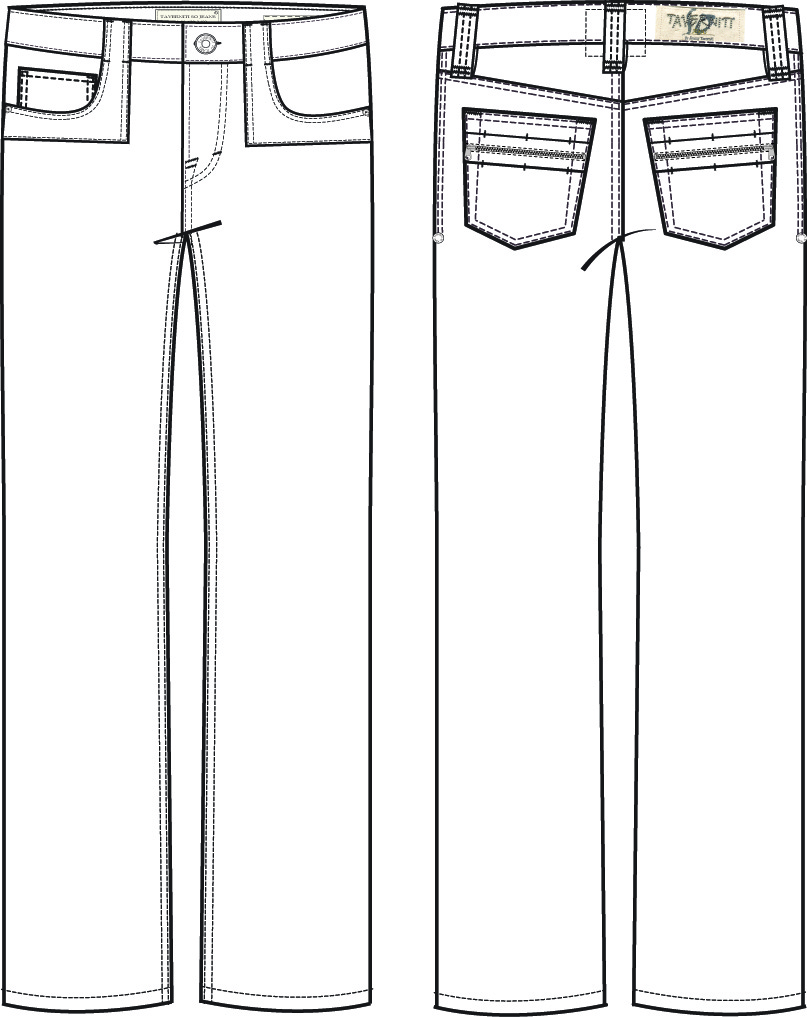
1.  When you get a sketch from design – its go time! This may be a  hand sketch or a sketch already done in Illustrator by design. If your sketch is done by hand – you will have to create a front and back flat sketch of the garment in Illustrator. You will have to work with the designer to ensure you have all the correct details – number of buttons, stitch gauges, thread colors, etc.

Front & Back Flat Sketch

2.  Now that you have your sketch, you will begin to create a Technical Package (also referred to as a Tech Pack, or TP). A Tech Pack’s basic pages are Sewing Details, Points of Measurement (or POM), Wash Description (mostly with denim), Label/Hangtag Placement, Bill of Materials (or BOM), and Packaging Instructions. All of these details are very important – the more detailed the better. Usually production is done in overseas factories where English is not their first language – so pictures, diagrams, and sketches are very helpful. (It also can save your butt if something comes in wrong – if it’s not in your TP or the TP was wrong, your company may incur a chargeback from the customer that bought it. If it was included in your TP and the TP was correct, then the factory must absorb the cost of the mistake.) Please see My Portfolio for what a finished Tech Pack looks like with all of the different pages.

3.  After the Tech Pack has been created, it is emailed to the factory where production will take place. From the TP and pattern, the factory will create a first fit sample. When the first sample comes in, it is spec’d (measured) and if it is out of tolerance it is noted in the fit comments. Then, a fitting is scheduled with a fit model and any other adjustments are noted as well. For example – even if the specs were correct on the first sample, the designer may not like the look of the back pockets on a pair of pants once it is on the fit model and will want to adjust it. Once all of the fit comments have been made, the Technical Designer sends the comments to the factory and adjusts the Tech Pack accordingly. Usually fittings are attended by the designer, the TD, and the patternmaker. This fit process is repeated until the desired look and fit are achieved. Once it is approved, it is ready for production.


So, while the above is generally what Technical Designers do, it is definitely not limited to that. I’ve been in positions where in addition to the above, I am also helping the patternmaker check their patterns, calculating the shrinkage for fabrics, helping the design team out with sketching and designing and also creating embroideries. On the other hand, I’ve also done less than described above in other positions. At some companies I was not required to do fits at all. These companies had a Fit Technician that only handled fits while I only handled creating the Tech Packs.


If you have any other specific questions, don’t hesitate to leave me a comment and I’ll be sure to comment back!


Other Tech Designers – what process do you follow at work?

Filed Under: FASHION COMPANIES, FASHION INDUSTRY, FASHION STUDENTS, TECHNICAL DESIGN

10 Things I’ve Learned From Working in the Fashion Industry for Ten Years

By 3 Comments

In July 2002, I headed out to Los Angeles from Wisconsin with plans of a fashion career. I arrived with my two suitcases in downtown L.A. at my new apartment having never visited L.A. before in my life.

Ten years and 6 jobs and 2 clothing boutiques later, I’ve accumulated my fair share of knowledge in the fashion industry.

Here are some of the things I’ve learned…

1) Fashion School is full of idiots.

There, I said it.

Ok, so obviously not everyone in fashion school is an idiot. But, what I did learn is that there tends to be a lot of folks in fashion school that only like the idea of being in the fashion industry. They are not interested in investing the actual work that goes along with it. Usually these are the people that end up not working in the fashion industry all together. I would suggest identifying the ones in your classes that are taking school seriously and keep in contact with them throughout your school experience. These will ultimately be your co-workers once you enter the job market and prove to be valuable contacts in the long run. I can’t tell you how many jobs I have been offered from people that are working in the industry that I knew from school. Networking starts your first day of class! So, show up and perform at your best!

2) Internships are key to landing your first job.

Without a doubt, finding an internship before you graduate will be imperative to finding work after graduation. Your internship may even lead to a full-time position! You can find internships through your counselor at school or online postings from your school website. If you have a particular company that you would like to intern for, contact them directly and see if they have any internships available. This works especially well with smaller companies or designers that are just starting out. They are looking for the extra help and what you can learn from them is often priceless.

3) Experience, experience, experience.

Experience will most likely get you further than your degree. My first job was mainly from my internship work I did while in school. I was able to build a great portfolio at my internship and was one step ahead of those who didn’t intern. There were times that I accepted certain positions because I knew that I would be gaining invaluable experience and knowledge in that position even if it wasn’t exactly what I wanted to do. Don’t be afraid to step outside of your comfort zone!

4) Be ready to wear more than one hat in your new position. (More like 132 different hats.)

I would say nine out of ten jobs you take in the fashion industry you will be doing significantly more than what is first described to you in your interview. You have to be ready and willing to pick up the slack wherever it is needed. You may have been hired as a Technical Designer, but you may also be required to help check the patterns, adjust the grading, run to the wash house and pick up samples… the list goes on and on. This isn’t necessarily a bad thing, its just adding to your experience. 🙂

5) The fashion industry is not glamorous.

I know everyone would love to believe that we work in fabulous buildings with fabulous interiors and dress up every day like we’re ready to walk the runway. Unfortunately, that’s usually not the case. The fashion industry isn’t as glamorous as it is made out to be on television. Usually the buildings and areas (especially in Los Angeles) are less than desirable and most employees choose comfort over fashion in the work place. You definitely don’t want to be caught in 5 inch heels having to run around all day to the sewers, patternmakers, etc. Unless you have an important meeting that day, it is easier to get around in flats, jeans, and a tank.

6) It is easier than you think to start your own business.

Working as a Technical Designer for most of my career in the fashion industry, I have met countless numbers of people that want to start their own business. After opening two clothing boutiques, I found that while its a lot of work, it is definitely attainable for anyone. You just have to start somewhere. Once you finish the first step, it leads you to the second step and then the third step. The idea is to be persistent and keep moving forward until you have reached your goal!

7) Great perks.

Ahhh yes… the perks. Some of the best things about working in the fashion industry are these type of benefits. More often than not you get a great discount on the clothes your company produces. This discount can be anywhere from 35%-75% off retail. You will probably also end up with many free samples to add to your closet. I myself have upwards of 75 pairs of jeans from working at a denim company! (Yes, I know that is completely a  ridiculous amount of jeans for any one person to have.) You may also find yourself invited to fashion shows and special events or parties sponsored by your company. This all makes the hard work and often long hours worth it!

8 ) Recruiters are the way to go.

Recruiters will help you find a job. Plain and simple. They’re rooting for you and will find jobs fitting your experience, guide you through the interview process and negotiate a salary and benefits on your behalf. My recruiters have helped me immensely when I’m job hunting. Here are a few fashion recruiting companies to get you started:

  • 24 Seven
  • Fourth Floor Fashion
  • JBCStyle

9) Expect to be laid off at some point in your career.

The fashion industry is a very unstable industry to work in. One day something’s hot, the next its not. So, don’t take it personally or get too upset if you get laid off. There’s always another job with a company that has the next hottest item. It is not uncommon to work for a dozen different companies in your career.

10) There will be opportunities to travel.

Whether you are a designer, a boutique owner, or in quality control there may be opportunities for travel. You may have to go to China or Mexico and check on production or speed the design process along to make sure deliveries are met. If you own a boutique you’ll want to travel to Vegas for the Magic Show or New York during market week to buy the latest styles for your store. So, if travel is your thing, there are many opportunities to be found in fashion!


As always if you have any questions or need any advice that I didn’t answer, leave a comment! I’m here to help!

Filed Under: CLOTHING BOUTIQUE, FASHION COMPANIES, FASHION INDUSTRY, FASHION STUDENTS, PERSONAL SHOPPING, START YOUR OWN BUSINESS, TECHNICAL DESIGN

  • 1
  • 2
  • Next Page »

Hi, I'm Raquel.
I'm a...
Technical Designer.
Clothing Boutique Owner.
Aspiring World Traveler.
Pro-Surfer Wannabe.
Read More…

Connect with me

  • Email
  • Facebook
  • Instagram
  • Pinterest
  • YouTube
5 First Steps to Start Your Online Boutique

FREE ‘HOW TO START A BOUTIQUE: STEP-BY-STEP MINI GUIDE’

How to Start a Boutique Mini Guide

Get started on your boutique business.

Looking for something?

SHOPIFY

Join over 12,000 subscribers and get instant access to my ‘Step-by-Step Start a Boutique Mini Guide’.

Popular Posts

How to Open a Clothing Boutique
How I Increased Traffic to My Online Boutique by 228% in One Week
How to Start a Boutique
How to Build a Photo Studio

Copyright © 2026 · Genesis Framework by Studio Press · WordPress

Don't miss out! Sign up for my latest boutique tips!